








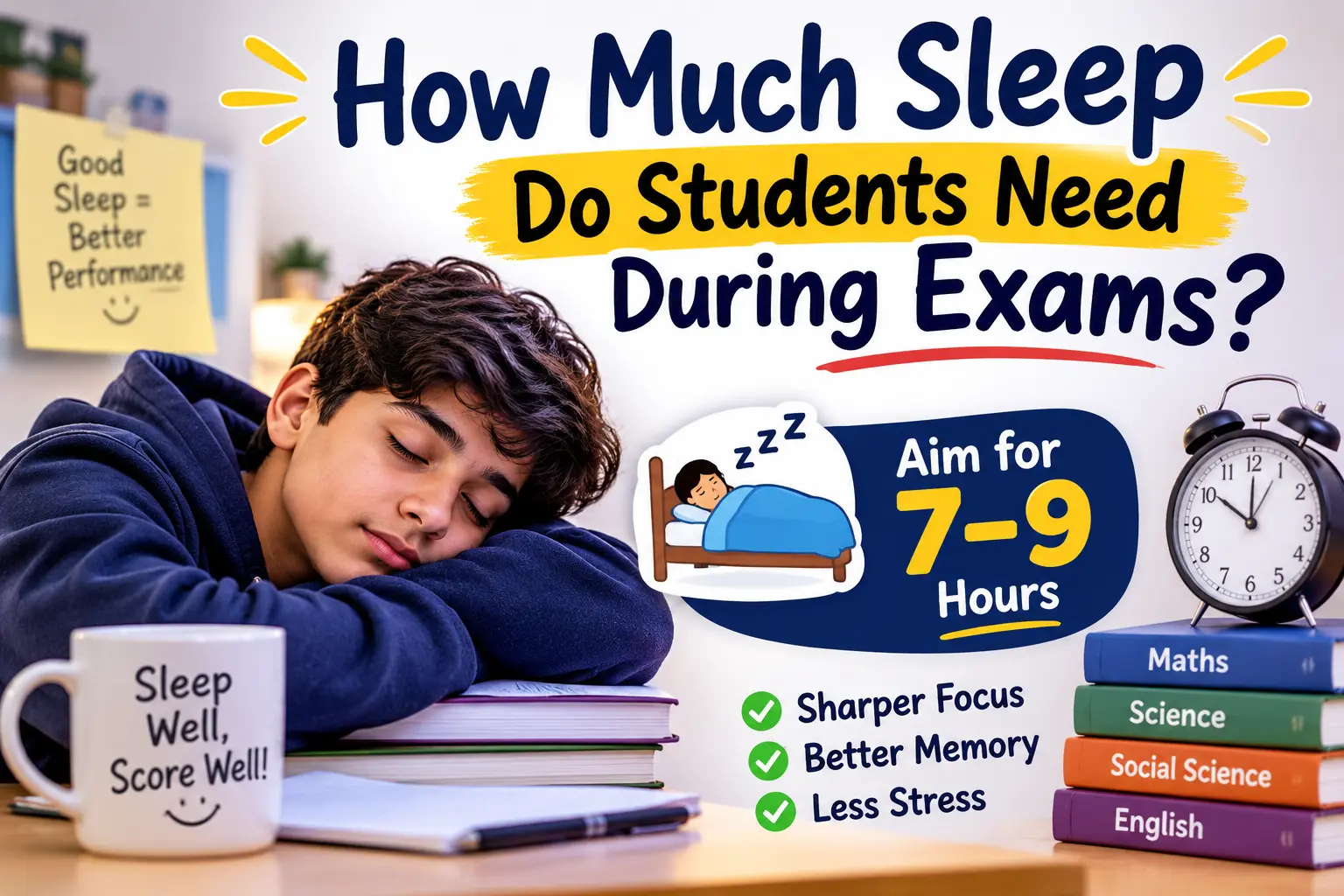
How much sleep do students need during exams? Teenagers aged 13 to 18 need 8 to 10 hours a night, and children aged 6 to 12 need 9 to 12 hours, according to the American Academy of Sleep Medicine. That doesn’t change in exam season. If anything, sleep matters more then, because it’s when your brain stores what you studied during the day.
This guide explains how much sleep students need by age, why all-nighters backfire, and how to build an exam-week sleep routine around a 10:30 am paper. If exam pressure is keeping you awake, our guide to exam stress has more ways to calm down.
How much sleep do students need? Hours by age
These are the hours recommended by the American Academy of Sleep Medicine’s consensus statement for children and teenagers, counting a full 24 hours.
| Age | Usually in | Recommended sleep
|
|---|---|---|
| 6 to 12 years | Classes 1 to 7 | 9 to 12 hours |
| 13 to 18 years | Classes 8 to 12 | 8 to 10 hours |
So a Class 10 or Class 12 student needs at least eight hours, and many teenagers feel best with nine. If you wake at 6:30 am for school, that means being asleep by about 10:00 to 10:30 pm, not just lying in bed with your phone.
Why sleep matters more during exams
So how much sleep do students need when exams are close? The same as always, and every night. Sleep isn’t time taken away from studying. It’s part of studying. While you sleep, your brain sorts and stores what you learned during the day, which is why a chapter often feels clearer the next morning.
Research backs this up. In a study at MIT, students who slept longer, slept better and kept a more regular bedtime through the course got better grades. Interestingly, a good night’s sleep only before the test didn’t make a difference. What counted was the sleep in the weeks and days while students were learning. The study was with college students and shows a link rather than proof, but the message for board exams is clear: steady sleep through December, January and February matters more than one early night before the paper.
Why all-nighters backfire
Staying up all night before a paper feels like making the most of your time. In practice, it usually costs marks:
- You remember less. Without sleep, what you crammed late at night isn’t stored well.
- You think more slowly. Tired students make more careless mistakes, misread questions and run out of time.
- Your mind is more likely to go blank. Tiredness and nerves together make recall harder in the exam hall.
- It knocks out the next day too. During board exams, papers are only a few days apart, so one lost night affects the next paper as well.
If you’re short of time, it’s better to sleep seven or eight hours and revise your key points in the morning than to stay up all night. Good sleep during exams beats extra hours of cramming.
An exam-week sleep routine
CBSE’s 2027 board papers start at 10:30 am, and most ICSE papers at 10:15 am, so your best thinking needs to happen mid-morning. Here’s a routine that works around that.
| Time | What to do
|
|---|---|
| 6:30 – 7:00 am | Wake up at the same time every day, including weekends |
| Morning | Hardest subject first, when you’re most alert |
| 2:00 – 2:20 pm | Optional short nap of 20 minutes or less, never late in the afternoon |
| After 5:00 pm | No tea, coffee, cola or energy drinks |
| 9:00 pm | Last study block ends. Light revision only after this. |
| 9:30 pm | Phone away, screens off, dim the lights |
| 10:00 – 10:30 pm | Asleep |
For how to fit study blocks into the rest of the day, see our guide to making a study timetable for board exams.
How to sleep better when you’re stressed
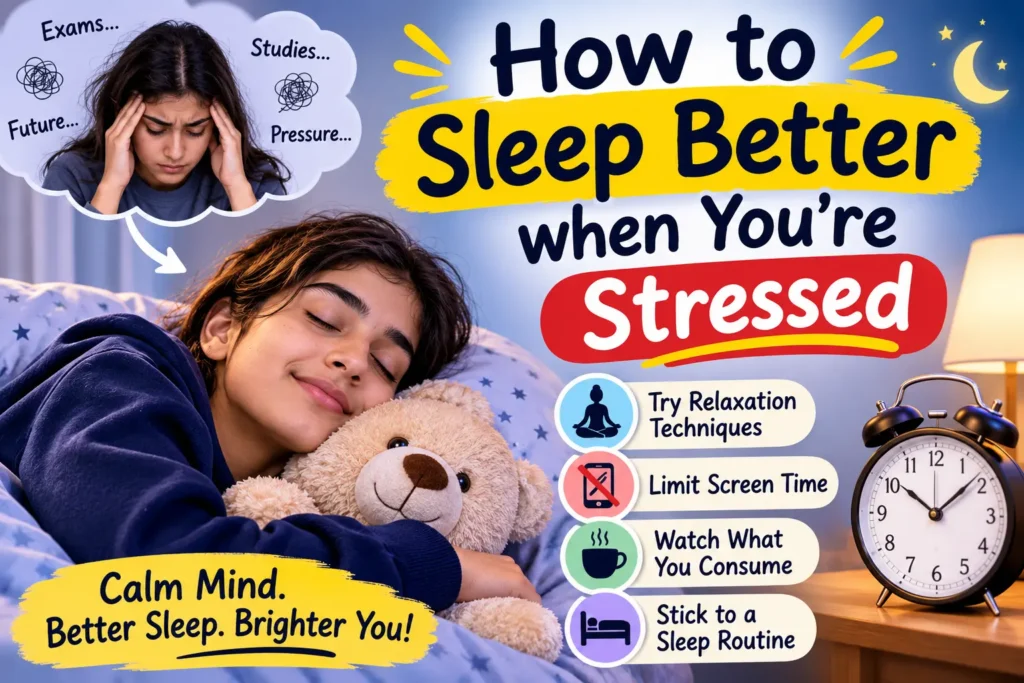
- Keep the same wake-up time every day. A steady sleep schedule sets your body clock more than an early bedtime does.
- Put the phone outside the room. Scrolling in bed keeps your mind busy and pushes sleep later.
- Write tomorrow’s plan before bed. A short list of what you’ll study tomorrow stops it going round in your head.
- Try slow breathing. Breathe in through your nose for four counts and out for six, for a few minutes. UNICEF India’s advice on exam anxiety also suggests a regular bedtime and skipping social media before sleep.
- Get some daylight and exercise. A morning walk or evening game helps you fall asleep more easily at night.
- Don’t study in bed. Keep your bed for sleep, so your brain links it with rest.
How many hours of sleep before an exam?
Aim for your normal eight to nine hours the night before a paper, at your usual bedtime. Don’t try to go to bed much earlier than usual; you’ll often lie awake. Lots of students sleep badly the night before a big exam because of nerves. One restless night is normal and won’t ruin your paper, especially if you slept well in the weeks before.
For parents: protecting your child’s sleep
Parents often ask how much sleep do students need when there’s so much left to revise. The answer doesn’t shrink in exam season, and a few house rules make it easier to protect.
- Don’t praise late nights. Praise steady routines instead.
- Keep the house quiet after about 9:30 pm in exam weeks.
- Agree on a time when phones are charged outside the bedroom.
- Watch for warning signs: sleeping very little for days, or sleeping far more than usual and still feeling exhausted. If that lasts, talk to your child and, if needed, a doctor.
For more on helping without adding pressure, read our guide on how parents can help their child during exams.
Frequently asked questions
How much sleep do students need before an exam?
Teenagers need eight to ten hours, so aim for your usual eight to nine hours the night before a paper. Steady sleep in the weeks before the exam matters even more than that one night.
Is 6 hours of sleep enough for a student?
Not regularly. Six hours is well below the 8 to 10 hours recommended for teenagers. Over several days, it leads to slower thinking, weaker memory and more mistakes, which is the opposite of what you need before board exams.
Should I stay up all night to study before an exam?
No. All-nighters make it harder to remember what you studied and to think clearly in the exam. If you’re short of time, sleep seven or eight hours and revise your key points in the morning instead.
Is it okay to nap during exam preparation?
A short nap of 20 minutes or less in the early afternoon can help. Avoid long naps or napping after about 4 pm, because they make it harder to fall asleep at night.
How much sleep do students need in Class 10 and Class 12?
Most Class 10 and Class 12 students are 15 to 18 years old, so they need 8 to 10 hours a night. That stays the same during board exams.
How we put this guide together
To explain how much sleep students need, we used the American Academy of Sleep Medicine’s recommendations for children and teenagers, MIT research on sleep and grades, UNICEF India’s advice on exam anxiety, and the 2027 CBSE and CISCE exam timings. This is general information, not medical advice. If sleep problems last for weeks, talk to a doctor. To work out your daily study time around good sleep, see how many hours a Class 10 student should study. Last updated: November 2026.