


Wondering how to choose a boarding school in India when every prospectus looks the same? Start with your child, not the school. Decide on the board, budget, distance and type of school first, then check each shortlisted school against the same points: affiliation, full fees, care and safety, academics, and how your child feels after a visit.
This guide gives you a 15-point checklist you can use for every school, a list of red flags, and a simple way to compare your shortlist side by side. It doesn’t promote any school. If you’re still deciding whether boarding is right at all, read our guide on whether to send your child to boarding school first.
Before you start: four decisions to make at home
Most of the work of how to choose a boarding school happens before you look at a single brochure. Agree on these four things as a family:
- Board. CBSE, ICSE/ISC, IB or Cambridge. If your child may move schools later or prepare for national entrance exams, this choice matters.
- Budget. The full yearly cost you can manage for every year until Class 12, not just the first year.
- Distance. How many hours by road, rail or air you’re willing to travel for visits, illness or emergencies.
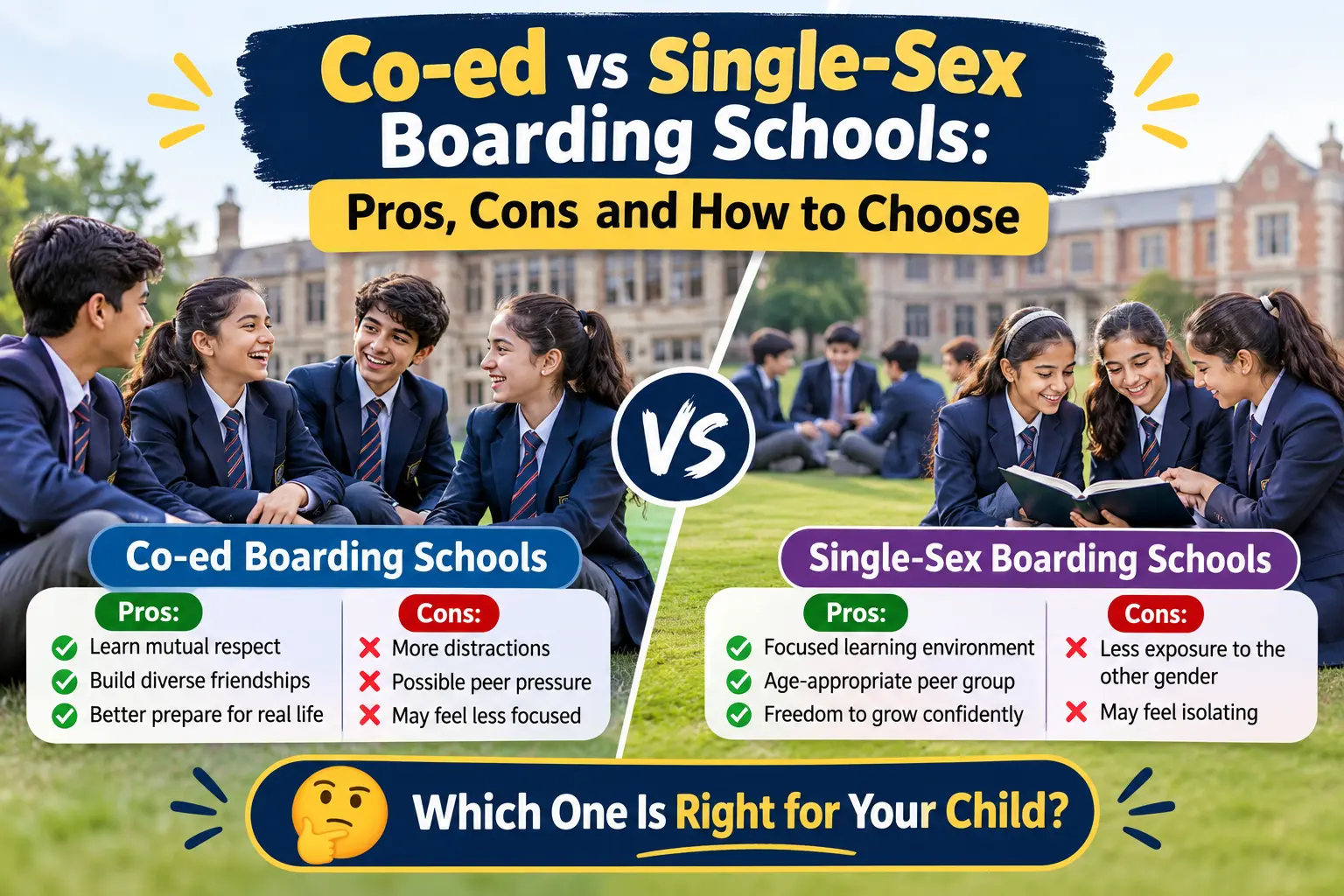
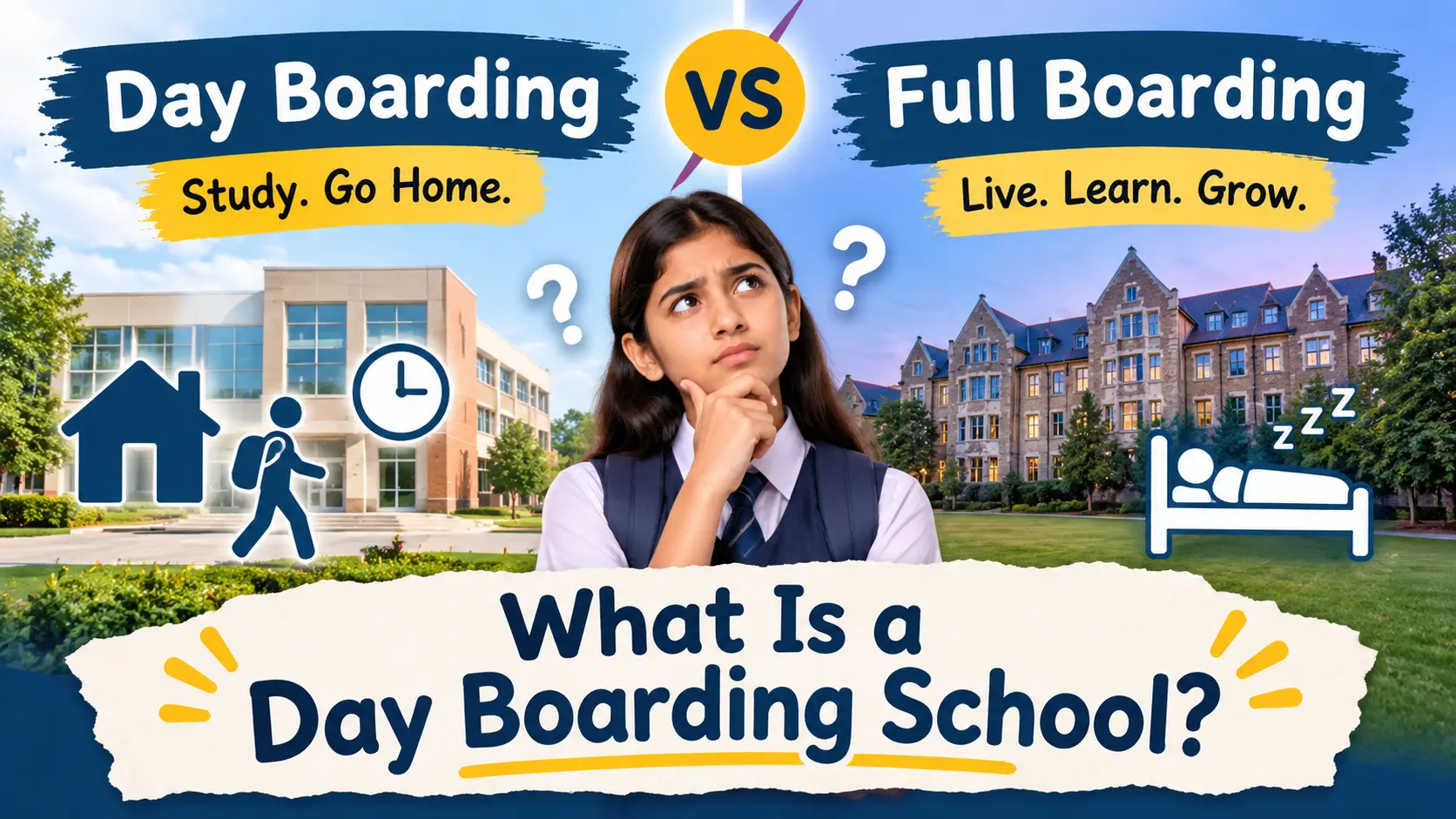
- Type. Co-ed or single-sex, full boarding or a school that also takes day scholars, and the class your child will join. Our guide to the right age for boarding school explains each entry point, and our explainer on what a day boarding school is covers the in-between options.
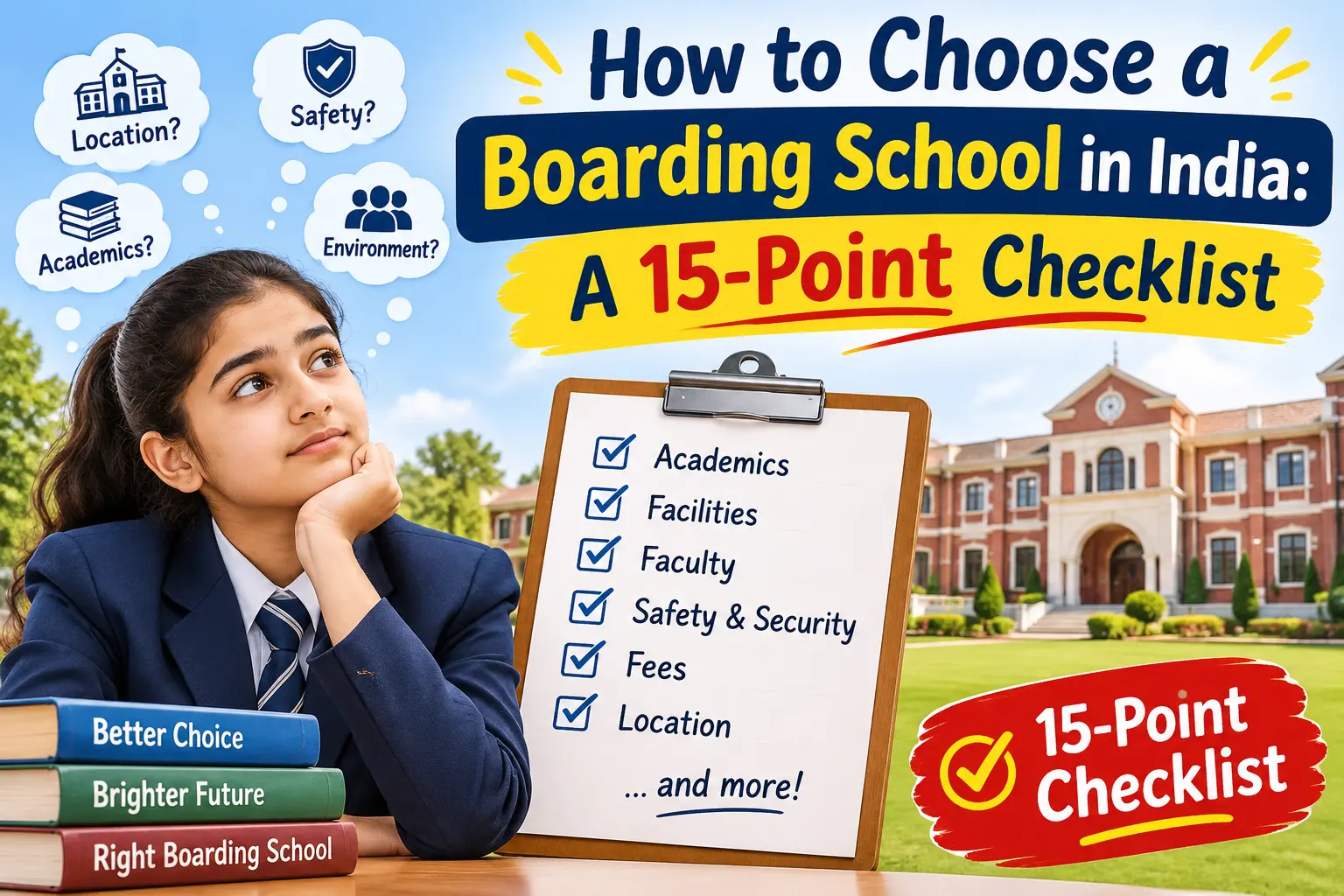
How to choose a boarding school: the 15-point checklist
Use this boarding school checklist for every school on your list, so you’re comparing like with like. Print it, or copy the points into your phone before each visit.
The basics
- Board affiliation, checked yourself. A school’s website saying “CBSE” isn’t proof. Confirm a CBSE school’s affiliation on CBSE’s SARAS affiliation portal using the school’s name or affiliation number. For ICSE/ISC, IB or Cambridge, ask for the school’s registration details and check them with the board.
- Entry class and age rules. Many schools admit only at certain classes, such as Class 1, 4, 6 or 9, and have their own age cut-offs. Check that your child’s class and date of birth fit before you spend time on a school.
- The full fee, in writing. Ask for every charge for the year: registration, admission fee, security deposit, tuition, boarding and lodging, uniform, books, travel and activity charges. Fees vary enormously. On our Dehradun list, indicative boarding school fees run from about ₹60,000 to ₹16,54,000 a year, and 24 of the 39 schools are under ₹3 lakh. Ask how much fees have risen each year recently.
- Location and travel. Note the nearest airport and railway station, the road time, and how the school handles travel at the start and end of term. Hill schools may also have different winter breaks.
Care and safety
- Houses and house parents. Ask how many children each house parent looks after, whether they live in the boarding house, and who covers their days off.
- Night supervision. Who is on duty at night in each boarding house, and how does a child reach an adult in an emergency?
- Medical care. Is there a doctor or nurse on campus, how many beds does the sick room have, and which hospital does the school use? How quickly are parents told when a child is unwell?
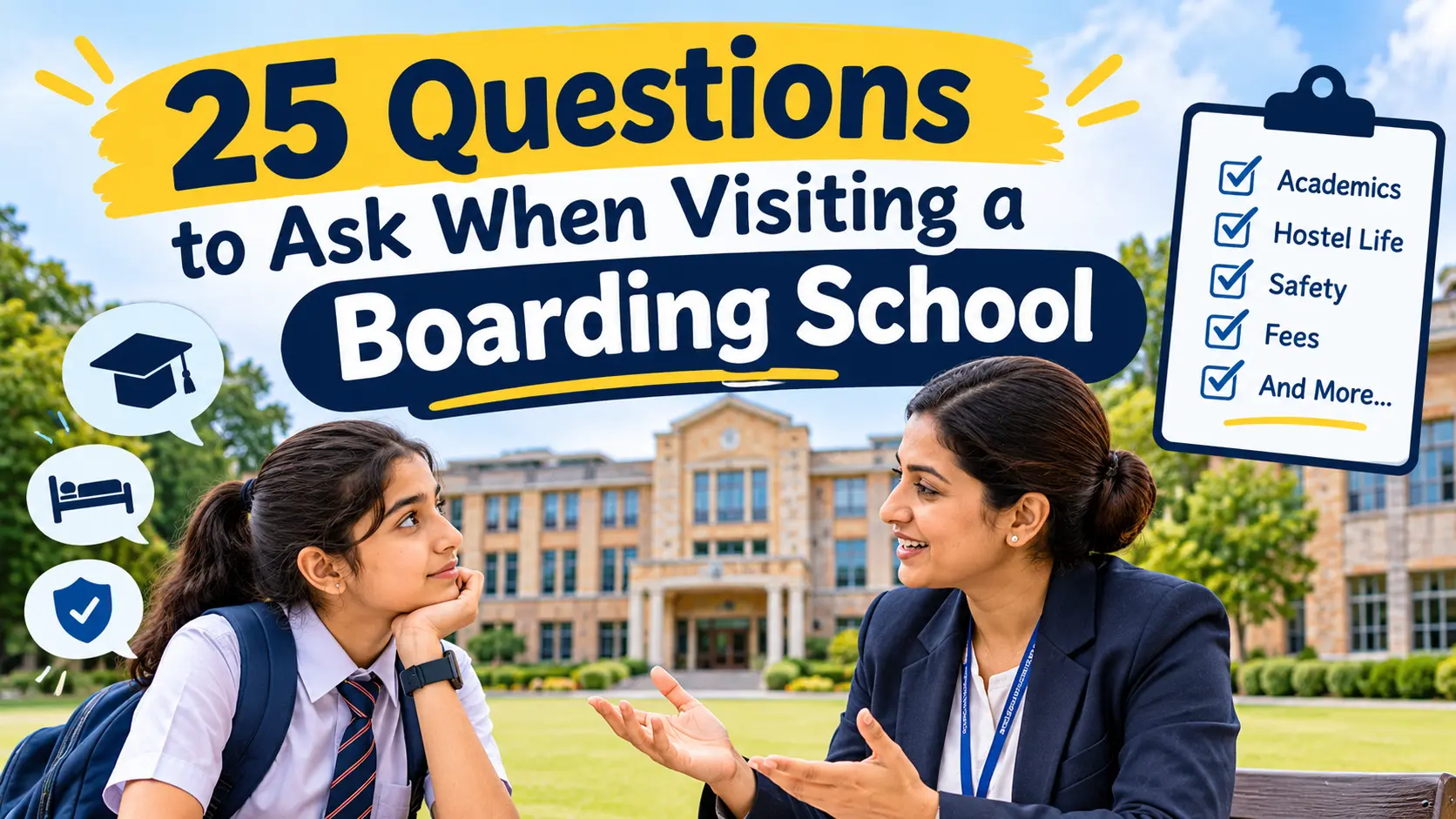
- Safeguarding policies. Ask to see the child protection policy and how it’s put into practice: staff background checks, POCSO training, CCTV in common areas, and how complaints are handled. NCPCR’s Manual on Safety and Security of Children in Schools sets out what schools should have in place, and includes a child safety checklist you can use as a reference when you ask questions.
- Bullying and ragging. Ask what counts as bullying at the school, how seniors and juniors are mixed in houses, and what happened the last time a case was reported. A school that says “we never have bullying” is less reassuring than one that explains how it deals with it.
- Contact, visits and outings. How often can your child call home, and how? How often can you visit, and when can children go out with parents? Schools vary widely, so check the rules match what your family can live with.
Learning and daily life
- Academics and results. Ask for the school’s board results for the last few years, class sizes, and how teachers support children who fall behind. Be wary of results shown only as a list of toppers.
- Prep and study support. How long is evening “prep”, who supervises it, and is there extra help before board exams?
- Sports and activities your child can actually do. A long list of facilities means little if juniors rarely get time on them. Ask which activities your child’s age group does each week.
- Food and dormitories. Look at the dining hall during a meal, ask for a week’s menu, and see the dormitories, washrooms and laundry arrangements yourself.
Fit
- Your child’s reaction. After a visit, ask your child what they liked and what worried them. A school can tick every box and still not be right for a particular child. Their comfort counts.
How to choose a boarding school in special situations
Choosing a boarding school gets a little harder in some situations. Add these questions to your list if any of them apply.
Your child has a learning difference or a health condition
Ask whether the school has a special educator and a counsellor, how teachers adjust lessons and exams, and how medicines are stored and given. Ask to speak to the person who would actually support your child, not just the admissions office.
You live abroad or move often for work
Ask whether the school needs a local guardian, how it handles travel for children flying in alone, and what happens during short breaks when most children go home. Check the board too, as some boards make moving schools between countries easier than others.
You’re choosing for two children
Decide whether you want them at the same school. It’s easier for visits and logistics, but some children do better on their own. Ask about sibling concessions, and check that both children’s classes have places.
Your child is joining in Class 9 or Class 11
Fewer schools admit at these stages, and friendship groups are already formed. Ask how many new students joined the same class last year, and how the school helps them settle in. If your child is changing board after Class 10, check which subjects and combinations are offered in Class 11.
Red flags to take seriously
Knowing the things to check in a boarding school is half the job. The other half is noticing when something feels wrong. Take these seriously:
- The school won’t put fees in writing, or adds “compulsory” charges later.
- You can’t verify the affiliation on the board’s own portal.
- You aren’t allowed to see the dormitories, washrooms or sick room.
- Staff can’t tell you how many children each house parent looks after.
- Pressure to pay a deposit on the day of your visit.
- Vague answers about safeguarding, or no written policy.
- Big claims (“No. 1 school in India”) without saying which ranking or year.
Compare your shortlist side by side
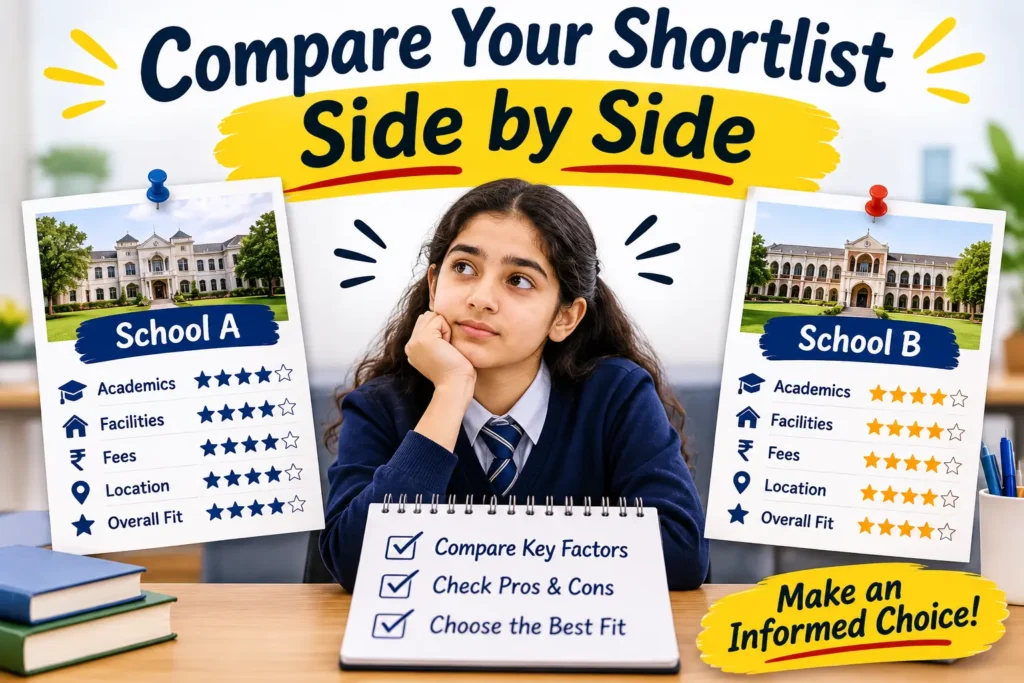
Once you’ve visited, put your notes into a simple boarding school comparison table like this one. Score each point from 1 to 5, and add a short note.
| Point | School A | School B | School C
|
|---|---|---|---|
| Affiliation checked | |||
| Full yearly cost (₹) | |||
| Travel time from home | |||
| Children per house parent | |||
| Medical care on campus | |||
| Safeguarding policy seen | |||
| Board results (last 3 years) | |||
| Food and dormitories | |||
| Contact and visit rules | |||
| Your child’s view |
Three to five schools is a good shortlist. More than that gets hard to compare, and fewer leaves you with no back-up if your first choice doesn’t offer a place.
Where to start your shortlist
Our national list covers 51 schools with boarding across India: 13 girls’ boarding schools, 12 boys’ boarding schools and 26 co-ed boarding schools. You can filter the full list of boarding schools in India by board, gender and fees, or go straight to girls’ boarding schools or boys’ boarding schools. Then use the checklist above on each one.
When you’re ready to apply, our guide to the boarding school admission process explains the 2027-28 timeline, documents and entrance tests.
Frequently asked questions
How do I choose a boarding school for my child in India?
The simplest way to work out how to choose a boarding school is to decide on board, budget, distance and type first. Then check each school’s affiliation on the board’s portal, get the full fee in writing, ask detailed questions about care and safety, visit the campus, and listen to your child’s reaction.
What should I look for in a good boarding school?
Verified affiliation, clear fees, enough house parents, round-the-clock supervision, medical care on campus, written safeguarding and anti-bullying policies, good teaching, and a place where your child feels comfortable. Facilities matter less than care.
How many boarding schools should I visit?
Visit three to five schools if you can. That’s enough to compare properly without the visits blurring together. Take the same checklist to each one and make notes the same day.
Is a CBSE or ICSE boarding school better?
Neither is better for everyone. CBSE follows NCERT books and suits families who may move or plan for national entrance exams. ICSE/ISC has a broader, more detailed syllabus, especially in English. Choose the board that suits your child’s plans.
How can I check if a boarding school is genuine?
Check its affiliation on the board’s own portal (SARAS for CBSE), ask for the registration number, visit the campus in person, read the fee terms carefully, and talk to two or three current parents.
Are expensive boarding schools always better?
No. A higher fee usually buys more facilities, smaller classes or a well-known name, but it doesn’t guarantee better care. When you’re working out how to choose a boarding school, judge each one on supervision, safety, teaching and fit, then see which of the good ones you can afford.
When should I start looking for a boarding school?
Start about a year before your child would join. Many boarding schools open registration around September to November for the following April, and some popular schools register much earlier.
How we put this guide together
We built this checklist on how to choose a boarding school from the questions Indian parents most often need answered, CBSE’s SARAS affiliation portal, NCPCR’s school safety manual, and EdulistIndia’s own school data on boarding schools in Dehradun and across India. Fees shown are indicative; always confirm the current fee schedule with each school. Last updated: November 2026.

One thought on “How to Choose a Boarding School in India: A 15-Point Checklist”