









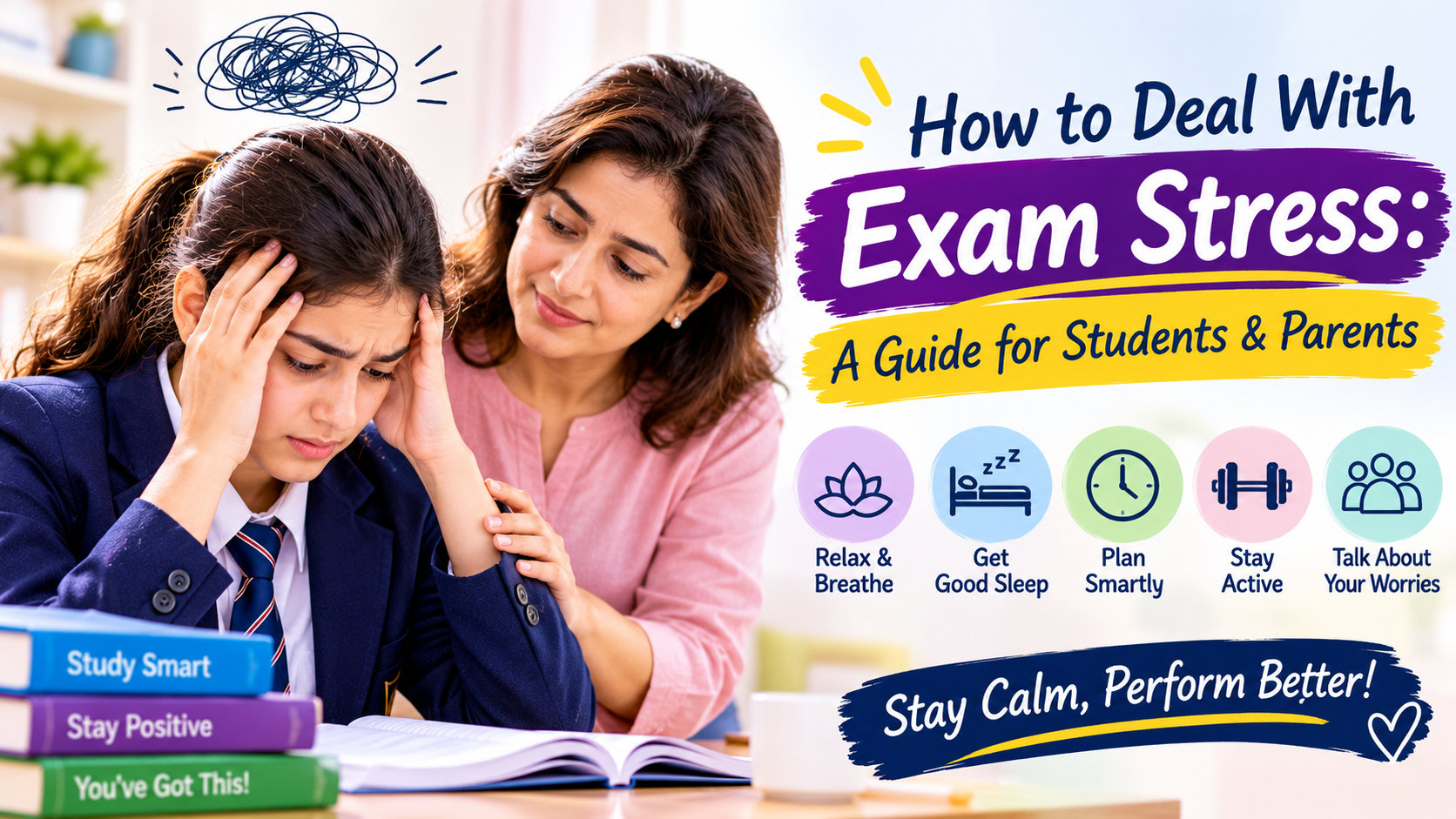
Feeling nervous before board exams is normal, and you’re far from alone. In a national survey of more than 3.79 lakh school students, NCERT found that 81% named studies, exams and results as major causes of anxiety. The good news is that exam stress is something you can manage. Knowing how to deal with exam stress doesn’t mean getting rid of every worry. It means keeping stress at a level where you can still sleep, eat, think clearly and study.
This guide is for students and parents. It explains what exam stress is, the signs to look out for, practical things that help before and during exams, what parents can do at home, and when it’s time to get more support. It also lists free helplines you can call in India.
What exam stress is, and why some of it is normal
Stress is your body’s natural response to pressure. When something matters to you, like a board exam, your body gets ready to act: your heart beats faster, your mind becomes more alert and you feel a push to get things done. A small amount of exam pressure can actually help you focus and start revising.
Exam stress becomes a problem when it stops helping and starts getting in the way. If worry keeps you awake, makes it hard to eat, or leaves you staring at the same page for an hour, the stress has grown bigger than it needs to be. That’s the point to use the steps in this guide.
Exam stress in students is common in India. The same NCERT mental health and well-being survey, run by its Manodarpan cell with students from Classes 6 to 12 across 36 states and union territories, found that students at the secondary stage reported more anxiety about studies, exams and results than younger students. In other words, the pressure tends to rise just as board exams come closer.
Signs of exam stress
Stress shows up differently in different people. These are some of the most common signs of exam stress. Noticing them early makes them easier to manage.
In your body
- Headaches, stomach aches or feeling sick
- Trouble falling asleep, or waking up very early
- Feeling tired all the time
- Eating much more or much less than usual
- A racing heart or tight chest when you think about exams
In your thoughts and feelings
- Constant worry about failing or letting people down
- Feeling irritable, tearful or easily upset
- Finding it hard to concentrate, or your mind going blank
- Thinking in extremes, such as “If this paper goes badly, everything is ruined”
In what you do
- Putting off studying, then panicking about lost time
- Studying late into the night and skipping sleep
- Pulling away from friends and family
- Spending more time on your phone to avoid thinking about exams
One or two of these now and then is normal before exams. If several last for more than a couple of weeks, read the section on when to get more help.
How to deal with exam stress: 12 things that help
These are the basics of stress management for students. They are simple, but they work best when you do them consistently, not just the night before a paper.
1. Make a plan you can actually follow
A lot of exam anxiety comes from feeling that there’s too much to do and no time to do it. Writing down what’s left and spreading it over the weeks ahead takes away much of that feeling. If you don’t have one yet, start with a realistic board exam study plan that leaves room for rest, and adjust it to your own pace.
2. Break big tasks into small ones
“Revise Science” is overwhelming. “Revise the first half of Life Processes and answer five questions” is not. Small tasks are easier to start, and ticking them off gives you a sense of progress.
3. Protect your sleep
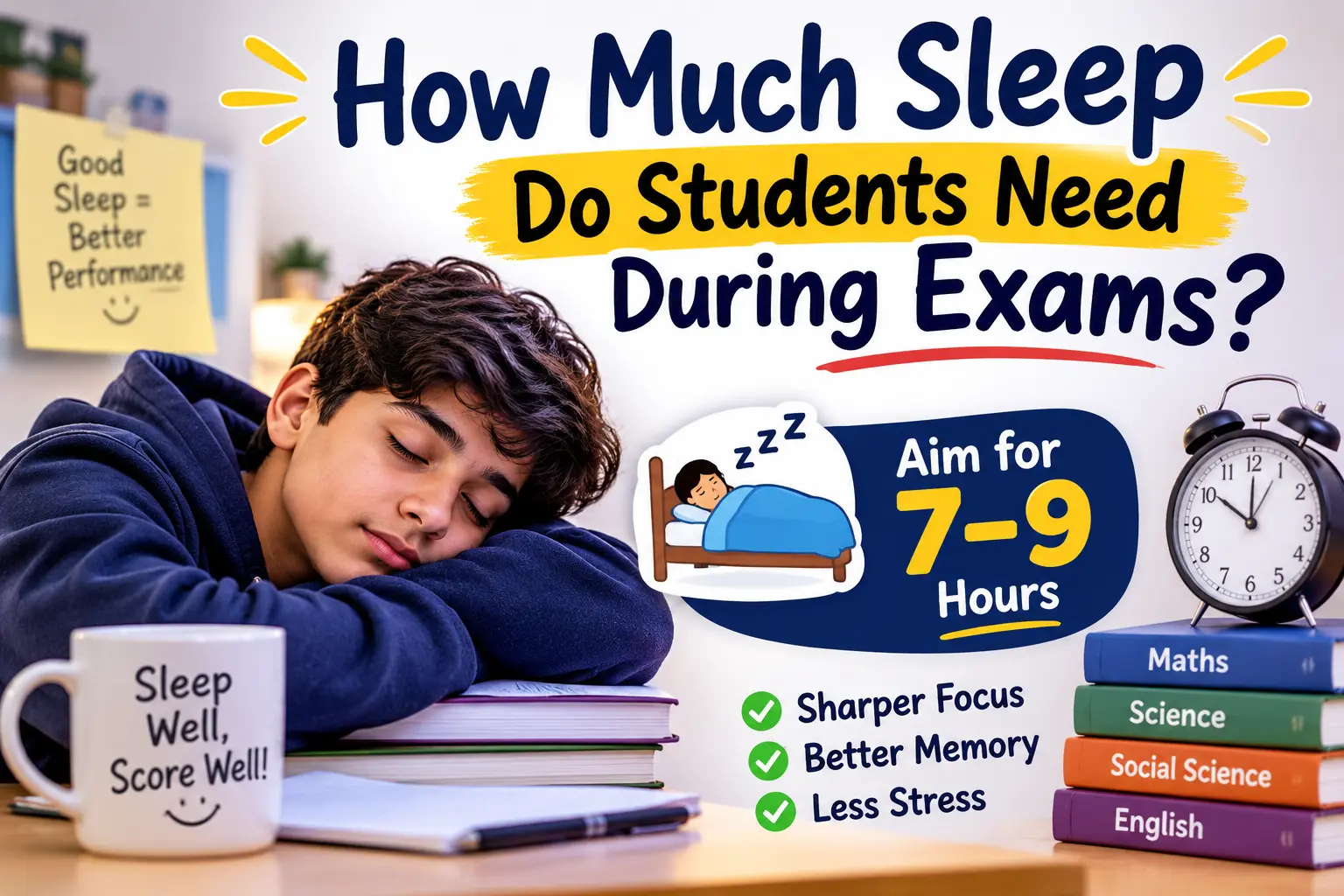
Sleep is when your brain stores what you’ve learned. The American Academy of Sleep Medicine recommends that teenagers aged 13 to 18 sleep 8 to 10 hours every 24 hours. Going to bed and waking up at the same time every day helps more than catching up on sleep at weekends.
4. Move your body every day
A 20 to 30 minute walk, a game of badminton, skipping or stretching can lift your mood and help you focus when you sit down again. You don’t need a gym. You just need to get up from your desk.
5. Eat regularly and drink water
Skipping meals makes concentration harder and can make you feel shaky or anxious. Keep simple snacks like fruit, nuts or curd nearby. Go easy on tea, coffee and energy drinks, especially in the evening, because they can make it harder to sleep.
6. Take real breaks
Study in blocks of about 45 minutes, then take a 10-minute break away from your books and your phone. Get some fresh air, drink water or chat with someone at home. Scrolling through social media doesn’t give your mind the same rest.
7. Cut down on comparison
Group chats about who has finished which chapter, or posts about other students’ scores, can make you feel behind even when you’re doing fine. Mute exam groups for a while if they make you anxious, and measure your progress against your own plan.
8. Calm your body with slow breathing
When you feel panicky, try breathing in slowly through your nose for a count of four and out through your mouth for a count of six. Repeat this for two or three minutes. Slowing your breathing helps your body settle. In the NCERT survey, students said yoga and meditation were among the ways they most often coped with stress, along with writing in a journal and trying to change the way they think.
9. Write your worries down
If worries keep going round in your head, write them on paper. Next to each one, write one small thing you can do about it, or “nothing I can do right now”. Some students set aside 10 minutes a day as “worry time” so worries don’t take over the whole day.
10. Talk to someone you trust
Telling a parent, friend, teacher or school counsellor how you feel can make stress feel lighter. You don’t need a solution straight away. Often, just saying it out loud helps.
11. Question all-or-nothing thoughts
Stress often makes us think in extremes. When you notice a thought like “If I don’t score 95%, my future is over”, try replacing it with something more accurate: “One exam is important, but it doesn’t decide my whole life.” For CBSE Class 10 students, it’s also worth remembering that there’s an optional second exam in May to improve up to three subjects.
12. Keep one thing you enjoy
Don’t give up everything you like until the exams are over. Keep a little time each day for music, a hobby, a favourite show or time with family. It gives you something to look forward to and helps you come back to your books refreshed.
Board exam stress: what makes it different
Board exam stress often feels heavier than stress about school tests, and there are good reasons for that. Results are discussed by relatives and neighbours, Class 12 students may be preparing for entrance exams at the same time, and many students feel that one set of marks will decide their whole future.
A few facts can help put things in proportion:
- Class 10 is no longer a single attempt. Since 2026, CBSE Class 10 students sit a compulsory main exam in February and March and can take an optional second exam in May to improve their marks in up to three subjects. The better score counts.
- Marks open doors, but not the only doors. Stream choices, entrance exams, skills and interests all shape what comes next.
- You only control your preparation. Focus on what you can do today, not on the result, which you can’t control yet.
The earlier you build the habits above, the easier it is to know how to deal with exam stress when February arrives and the papers begin.
How to stay calm on exam day
Knowing how to deal with exam stress on the day itself can make a real difference to how you perform.
The night before
- Do light revision only: formulas, key points and your mistakes notebook.
- Pack your bag with your admit card, pens, pencils, geometry box and a water bottle.
- Go to bed at your usual time. Last-minute cramming usually adds stress without adding marks.
On the morning
- Eat a proper breakfast, even if you don’t feel hungry.
- Leave early so you aren’t worried about traffic.
- Avoid long discussions outside the exam hall about what might come. They usually make people more anxious.
In the exam hall
- Use the reading time to go through the paper calmly and pick your internal choices.
- Start with a question you know well to build confidence.
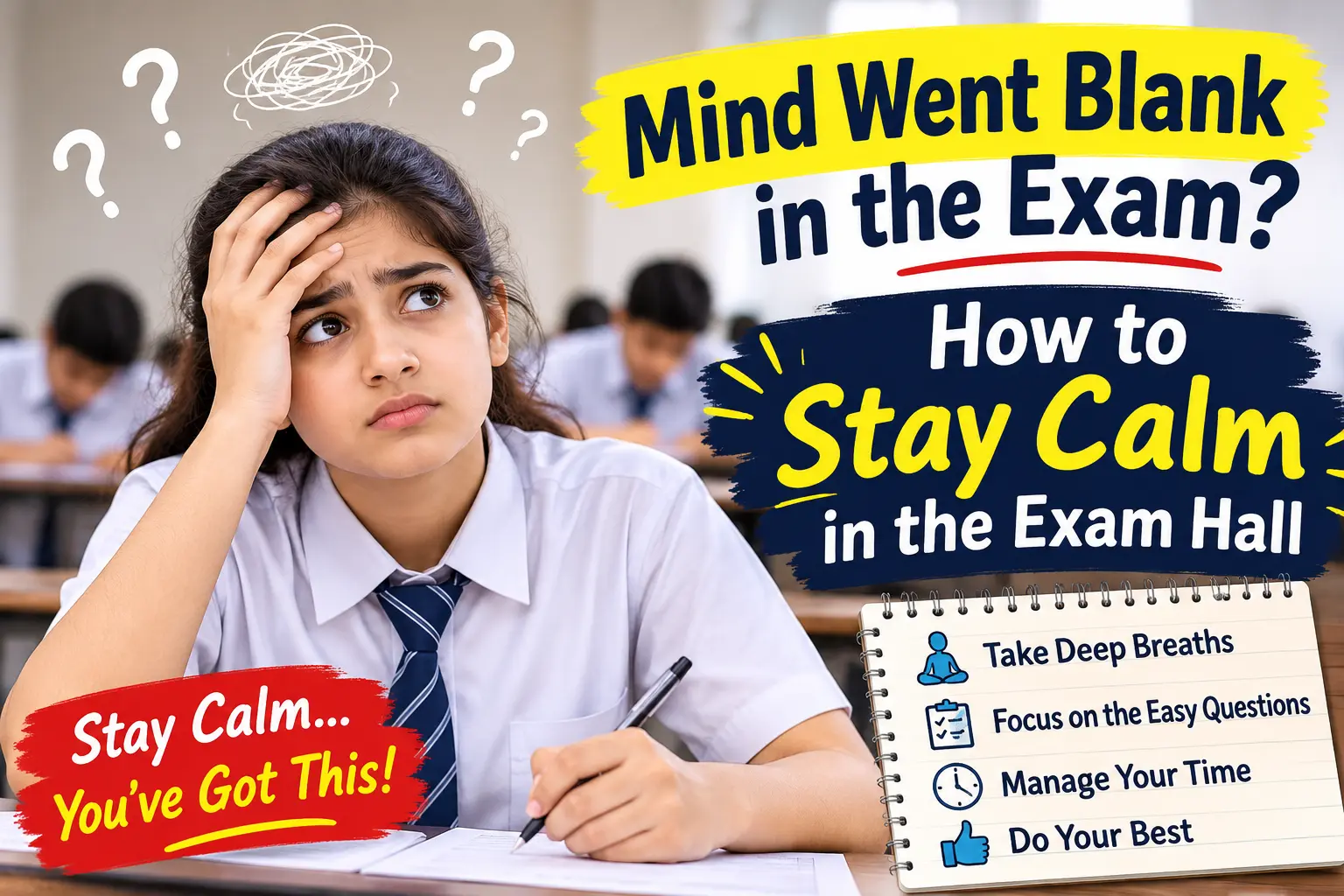
- If your mind goes blank, put your pen down, take three slow breaths and move to another question. Come back later.
- Keep an eye on the time, but don’t keep checking how fast others are writing.
After each paper
Try not to go over every answer with friends. You can’t change that paper now, and the next one deserves your full attention. Eat, rest for a while, and then start revising for the next subject.
Exam stress: a guide for parents
Parents often ask us how to deal with exam stress at home, both their child’s and their own. Your support matters a great deal, and most of it comes from small, everyday things.
Signs to watch for in your child
- Sleeping much less or much more than usual
- Skipping meals or eating far more than normal
- Frequent headaches or stomach aches before school or tests
- Getting angry or tearful over small things
- Withdrawing from family and friends, or giving up things they usually enjoy
What helps
- Listen more than you advise. Let your child talk about their worries without jumping in with solutions or lectures.
- Make it clear that your love doesn’t depend on marks. Saying this out loud can take a huge weight off a child’s shoulders.
- Keep the routine steady. Regular meals, sleep times and a quiet study space help more than extra tuition hours.
- Praise effort, not just results. “I can see how hard you’re working” is more helpful than “You’d better score well.”
- Manage your own worry. Children notice parents’ anxiety quickly. Talk to your partner or a friend about your own stress, not your child.
- Protect them from outside pressure. Gently steer relatives away from questions about marks and rankings.
What to avoid
- Comparing your child with siblings, cousins or classmates
- Setting targets your child hasn’t agreed to
- Asking about marks every day
- Threats or warnings about what will happen if they don’t do well
- Making exams the only topic at home
A simple check-in like “You seem tired lately. Do you want to go for a walk?” often opens a conversation more easily than a direct question about how they’re feeling.
When exam stress needs more help
Knowing how to deal with exam stress also means knowing when it has become more than stress. Most exam stress settles once exams are over. But sometimes stress turns into something that needs more support. Speak to a doctor, school counsellor or a mental health professional if:
- Signs of stress last for more than two weeks or keep getting worse
- Sleep, eating or daily life are badly affected
- Panic attacks happen often
- Your child seems hopeless, stops enjoying everything, or withdraws completely
If a young person talks about not wanting to live or about harming themselves, take it seriously and get help the same day. Call Tele-MANAS on 14416, speak to a doctor, or call 112 if there is immediate danger. You don’t need to wait for things to get worse before asking for help.
Needing support is not a sign of weakness. Mental health conditions are common in young people. The World Health Organization estimates that one in seven 10 to 19-year-olds worldwide experiences a mental health condition, and that many of these go unrecognised and untreated. Getting help early makes a real difference.
Free support you can call in India
- Tele-MANAS (government mental health helpline): call 14416 or 1-800-891-4416. It’s free, available 24 hours a day, and offers support in around 20 languages. More details are on the Tele-MANAS website.
- CBSE counselling for board students: CBSE runs free psycho-social counselling for Class 10 and 12 students each board season on its toll-free number 1800-11-8004. In 2026, it ran from 6 January to 1 June, with a 24×7 recorded helpline in Hindi and English and tele-counselling with trained principals, counsellors, special educators and psychologists, according to All India Radio News. Check cbse.gov.in for the 2027 dates.
- Your school counsellor: many schools have a counsellor or wellness teacher. They understand exam pressure and can help you plan.
- Emergency: if someone is in immediate danger, call 112.
Frequently asked questions
Is it normal to feel stressed before exams?
Yes. Most students feel some stress before exams, and a little can help you focus. It becomes a concern when it affects your sleep, eating or ability to study for days at a time.
How can I calm down quickly before an exam?
Slow your breathing: breathe in for a count of four and out for a count of six, for two or three minutes. Relax your shoulders, drink some water and remind yourself of one topic you know well.
How do I stop overthinking about exam results?
Focus on what you can control today, which is your preparation. Write your worries down, keep busy with things you enjoy after each paper, and limit conversations about expected marks.
What should I do if my mind goes blank in the exam?
Put your pen down, take three slow breaths and move to a question you feel sure about. Once you’ve answered something, your memory often comes back. Return to the difficult question later.
Can exam stress make you physically ill?
Stress can cause headaches, stomach aches, poor sleep and tiredness. If physical symptoms are frequent or severe, see a doctor to rule out other causes.
How can parents reduce exam pressure on children?
Keep home calm and routines steady, avoid comparisons, praise effort, and tell your child clearly that your love and pride don’t depend on their marks.
What should I do if I’m too stressed to study?
Start with one small task, like reading two pages or solving three questions. Small wins make the next step easier. If stress keeps stopping you from studying for days, talk to a parent, teacher or counsellor, or call Tele-MANAS on 14416.
About this guide
We wrote this guide to help students and parents understand how to deal with exam stress in a practical, everyday way. It draws on NCERT’s survey of school students’ mental health, WHO information on adolescent mental health, sleep guidance for teenagers and official information on CBSE’s counselling service. It gives general information and is not a substitute for advice from a doctor or mental health professional. If you or your child need someone to talk to, call Tele-MANAS on 14416, free and at any time of day or night. Last updated: November 2026.

3 thoughts on “How to Deal With Exam Stress: A Guide for Students & Parents”