




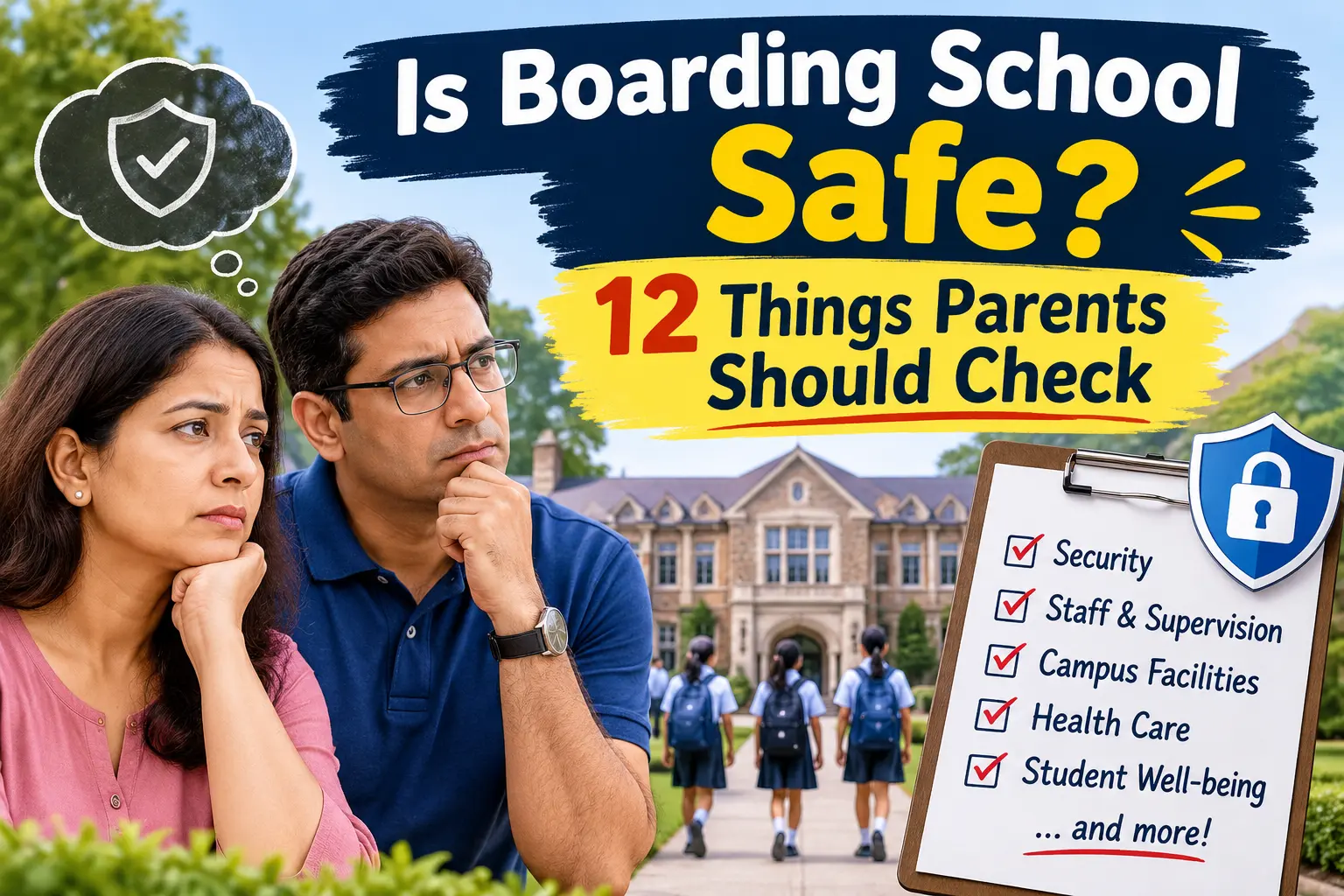
Is boarding school safe? A well-run boarding school can be a very safe place for a child, but safety depends on the school, not on boarding itself. What makes the difference is how many adults look after the children, who is on duty at night, how staff are checked, and what happens when a child reports a problem. You can check all of these before you apply.
This guide gives you 12 things to check, what the rules in India already require of schools, warning signs to watch for after your child joins, and what to do if you’re worried. If you’re still deciding whether boarding suits your family at all, start with our complete boarding school guide.
Is boarding school safe? What the rules already require
Indian schools aren’t left to decide on safety alone. A few rules and guidelines apply:
- CBSE schools: CBSE’s 2017 circular on the safety of children in schools places responsibility for children’s safety on campus on the school. It asks schools to get a safety audit from the local police, install working CCTV cameras at vulnerable points, carry out police verification and psychometric evaluation of all staff, control visitors’ access, and set up committees, including ones under the POCSO Act.
- All schools: NCPCR’s Manual on Safety and Security of Children in Schools sets out safety measures and includes a child safety checklist for regular audits.
- The law: the Protection of Children from Sexual Offences (POCSO) Act, 2012 applies in every school, boarding or day.
So the useful question isn’t just “is boarding school safe?” but “does this school actually follow these rules, and can it show me?”
12 things to check before you choose
Supervision
- Children per house parent. Ask how many children each house parent looks after, and who covers their days off. A clear number is a good sign; a vague answer isn’t.
- Night duty. Who is awake or on call in each boarding house at night, and how does a child reach them?
- Separate, supervised boarding houses. Juniors and seniors, and boys and girls in co-ed schools, should have clearly separated houses with adults in charge.
Staff and policies
- Staff checks. Ask whether every adult who works with children, including drivers, guards and kitchen staff, has police verification.
- A written child protection policy. Ask to see it, and ask who the safeguarding lead is and how staff are trained.
- A clear complaints route. How can a child report a problem, to whom, and what happens next? Ask about the school’s POCSO and grievance committees.
- Anti-bullying and anti-ragging rules. Ask how seniors and juniors mix, and how the last reported case was handled.
Health and wellbeing
- Medical care. Is there a nurse or doctor on campus, which hospital is used, and how quickly are parents told when a child is unwell?
- Emotional support. Is there a counsellor, and can children see them without going through a teacher?
Campus and contact
- Campus security. Gate entries, visitor registers, CCTV in common areas, and rules on who can take a child out.
- Contact with home. How often can your child call you, and can they reach you privately if something is wrong?
- Openness with parents. Can you visit the boarding house, talk to house staff, and meet other parents? Schools that welcome questions are usually more confident about their care.
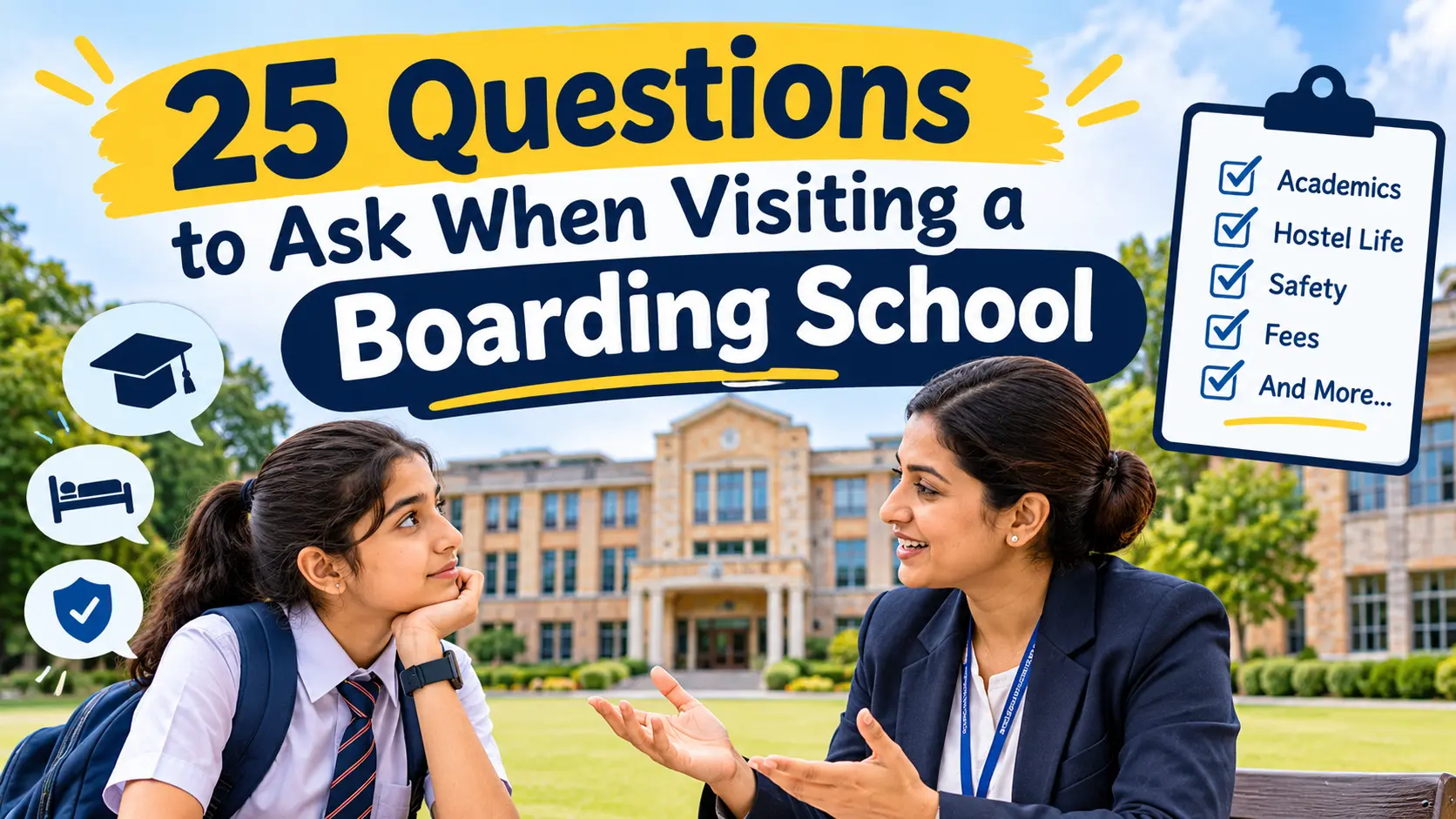
Take these to every campus. Our 25 questions to ask when visiting a boarding school include what a good answer sounds like.
Is boarding school safe for girls?
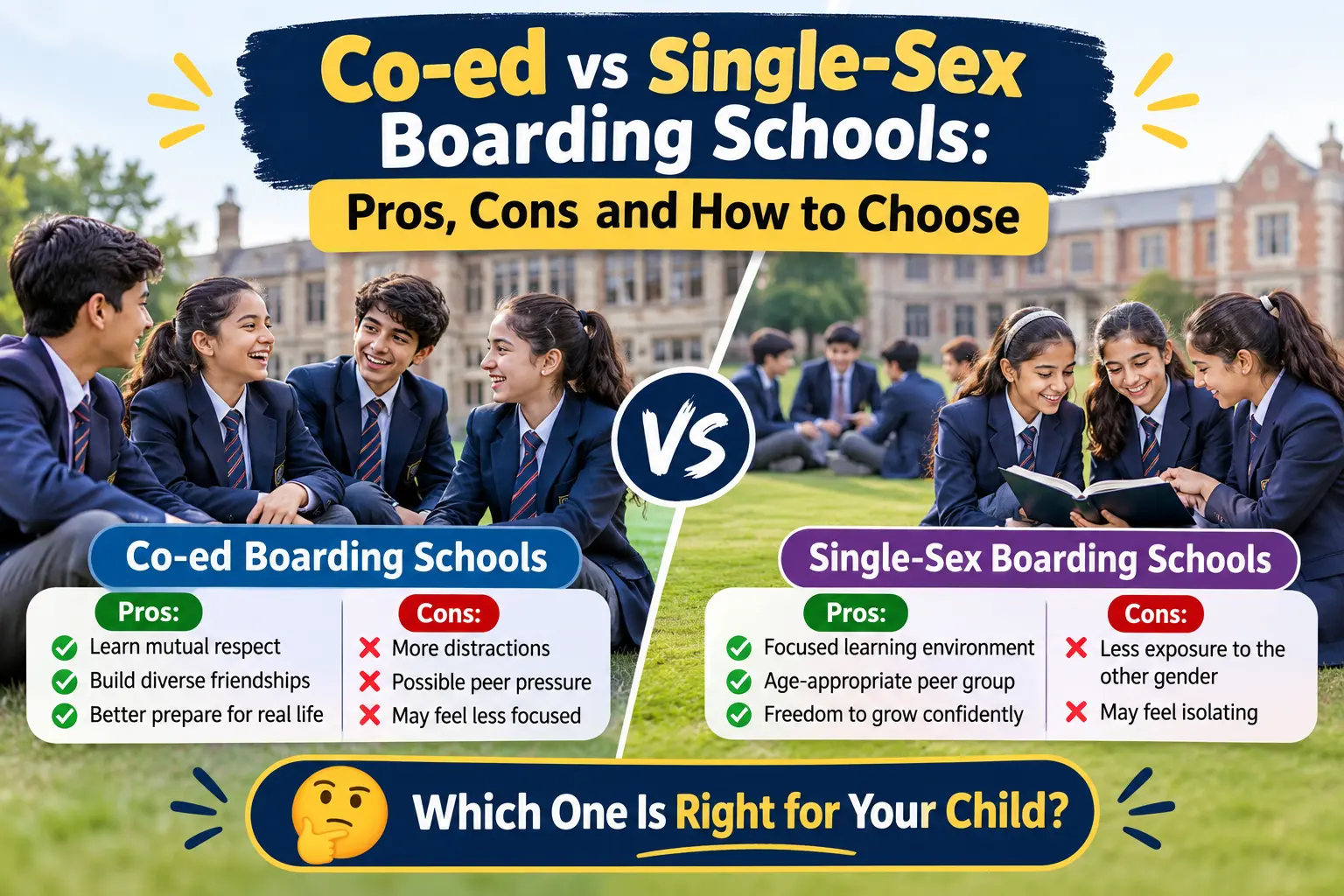
Parents of daughters often ask: is boarding school safe for girls, and is a girls’ school safer? Safety comes from the same things in either type of school: female house staff for girls’ houses, night supervision, strict visitor rules, and a child protection policy that’s actually followed. A girls’ school isn’t automatically safer, and a co-ed school isn’t automatically riskier. Our guide to co-ed vs single-sex boarding schools covers the differences.
If you’re looking at girls’ schools in the hills, you can compare girls’ boarding schools in Dehradun using the checklist above.
Is boarding school safe for younger children?
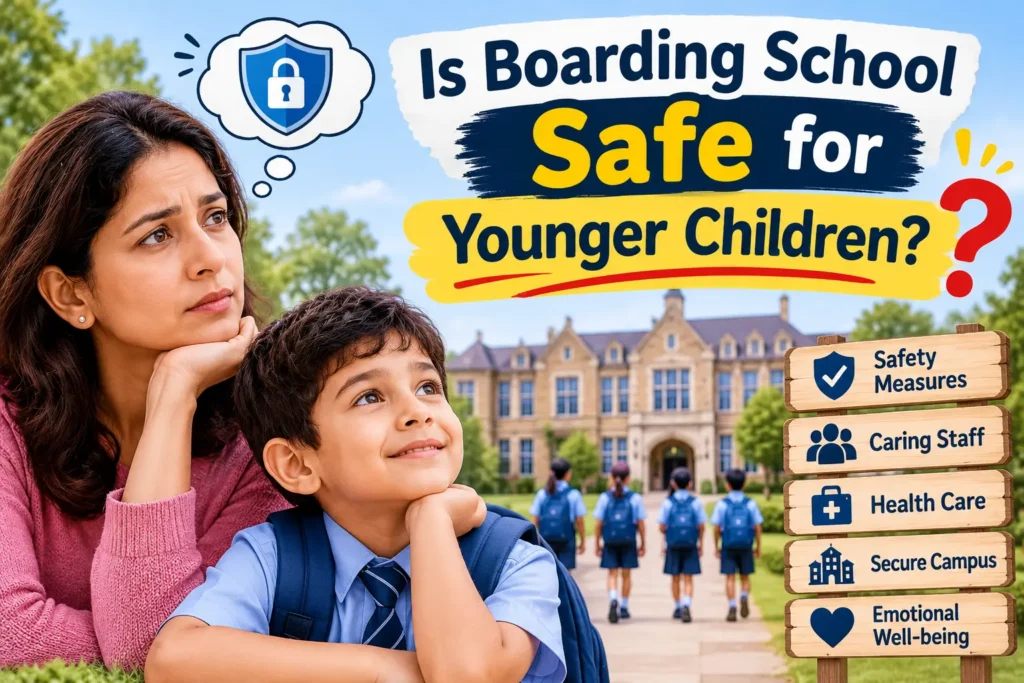
Children in the junior classes need more adult care, not just a safe campus. If your child is joining in Class 1 to 5, ask about smaller dormitories, a house parent living in the junior house, and who helps with bathing, clothes and bedtime. Our class-by-class guide to the right age for boarding school explains what changes at each entry point.
Red flags
If you see any of these on a visit, the honest answer to “is boarding school safe here?” is probably no, or not yet.
- You aren’t allowed to see the boarding houses, washrooms or sick room.
- No written child protection or anti-bullying policy.
- Staff can’t say who is on duty at night.
- Children can only call home with a staff member listening, with no other way to raise a concern.
- “It never happens here” in answer to every question about bullying.
- Pressure to decide or pay on the day of your visit.
After your child joins: signs to watch for
Is boarding school safe once your child is there? Keep watching, and keep talking. Most children have ups and downs in their first term, and some homesickness is normal. But talk to your child, and to the school, if you notice:
- sudden reluctance to go back after a holiday, or panic about returning
- unexplained injuries, or missing clothes and belongings
- big changes in sleep, eating or mood that last
- a child who stops mentioning friends, or a particular adult or older student
- calls that always seem rushed or guarded
What to do if you’re worried
- Listen to your child calmly and take what they say seriously. Don’t promise to keep it secret, but promise to help.
- Raise it with the house parent and the principal in writing, and ask what the school will do and by when.
- Use the school’s complaints and POCSO committees if the concern is serious.
- Contact outside help if needed. Child Helpline 1098 is free and available 24×7 for children in distress. In an emergency, call 112. Any suspected sexual abuse must be reported to the police under the POCSO Act.
- Bring your child home if you believe they’re not safe while it’s sorted out.
Frequently asked questions
Is boarding school safe in India?
Many boarding schools in India are safe and well run, but it varies by school. Check supervision, staff verification, written child protection policies, medical care and how complaints are handled before you choose.
How do I know if a boarding school is safe?
Visit the boarding houses, ask for the child protection and anti-bullying policies, ask how many children each house parent looks after and who is on duty at night, and talk to current parents.
Is boarding school safe for a 10-year-old?
It can be, if the school has a separate junior house with resident staff and small dormitories, and your child is ready to live away from home. Readiness matters as much as the school’s safety measures.
Are CBSE boarding schools required to have CCTV and staff checks?
Yes. CBSE’s 2017 circular asks affiliated schools to install working CCTV at vulnerable points, get police verification and psychometric evaluation of staff, and have a police safety audit of the campus.
What should I do if my child says they feel unsafe at boarding school?
Listen calmly, write down what they tell you, and raise it with the house parent and principal straight away. For serious concerns, use the school’s POCSO committee, call Child Helpline 1098, or contact the police.
How we put this guide together
To answer “is boarding school safe?”, we used CBSE’s 2017 circular on the safety of children in schools, NCPCR’s Manual on Safety and Security of Children in Schools, the POCSO Act, and the questions Indian parents most often raise about boarding. For a full checklist when shortlisting, see how to choose a boarding school, or browse boarding schools in India. Last updated: November 2026.